Dentsu School of Influence Graduate Rerulagantse Taukubong On Starting As An Intern to Becoming An Award Winning Content Creator
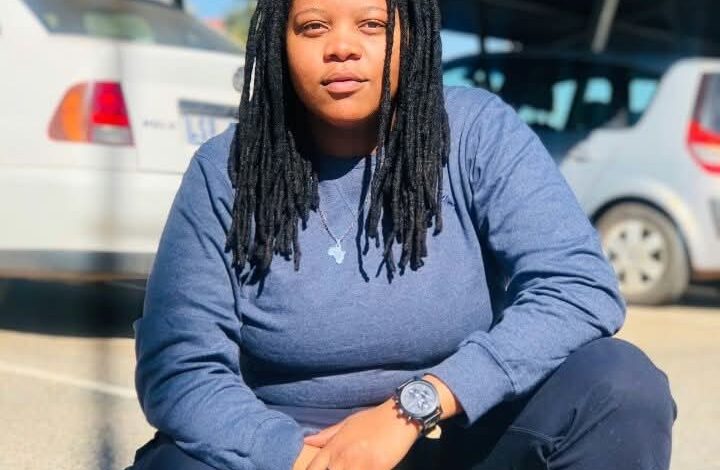
Dentsu School of Influence Graduate Rerulagantse Taukubong On Starting As An Intern to Becoming An Award Winning Content Creator. There is so much power in starting from the bottom and working your way all the way to the top. Rerulagantse Taukobong, can definitely attest to the statement. Her career started as a Communications Intern at a district hospital in Carletonville. She worked on photography, events, internal and external communications, and writing stories about the work being done at the hospital.
After that Rerulagantse joined other organizations, growing in the communications and digital space. She has also worked with major events, further positioning herself well in the industry. Now she creates lifestyle and entertainment content based on her everyday life. Rerulagantse shares moments with her two-year-old son, her partner, family, and the places they visit and their experiences. She also enjoy creating content around cars, travel and the brands that she already uses.
Most recently, Rerulagantse graduated from the Dentsu School of Influence 2026, earning a certificate in content creation. She applied for the programme because she wanted to learn and understand the business side of content creation, how to work with brands, how to position herself professionally and how to build a career that could last. The programme gave her that and so much more. She went on to win the Samsung Creator Challenge
1. Your career journey spans public relations, digital marketing, communications and content creation. How have these different experiences shaped the creator you are today?
PR taught me about image and how people perceive me. Communications taught me about the message behind what I’m saying. Digital marketing taught me about building a presence, especially on social media. When it comes to Content creation I try to bring all of those three elements together to influence my creative side. When I was working in an agency, I was doing this for companies. Now that I’m creating for myself, I’m learning how to apply the same thinking to my own personal brand. I’m still new to content creation, so there’s a lot I need to learn, especially when it comes to videography, photography and improving the quality of my work. But I have a strong foundation, and I’m excited to keep building from here.
2. You started your career as a Communications Intern at a district hospital in Carletonville. What important lessons from that experience still influence the way you tell stories today?
My first proper job was actually at Carletonville District Hospital through the EPWP programme and I was fortunate to be placed at the communications department, and one of the biggest things I learned was how to work with what I had. It is a government setting, there were a lot of structures and processes to follow, so creativity wasn’t always easy. There were also limitations when it came to some of the technology and digital tools available to us. I had to find ways to do things with what was available to me. I still carry that with me today. I shoot and edit most of my content on my smartphone which is also a phone I use on a regular basis. I’d love to have more equipment, but I don’t want to wait until I have everything before I can create. I learned that I can still create and execute with what I have. I got more room to be creative when I was given the opportunity to manage the hospital’s Facebook page. I worked on the copy, social media ideas and how we communicated with patients through the page. I also learned that I enjoy taking photographs and videos at events because I would always reach for the camera whenever there was an event or an outreach.
3. You have worked with major brands such as Lenovo Africa, HPE, SYSPRO, Nampak, Adams & Adams and Vodacom. How has working on the agency side influenced the way you approach brand partnerships as a content creator?
I haven’t had a formal brand partnership as a content creator yet. I’ve had opportunities to create for brands like Foneyam and eVOD during my time at Dentsu School of Influence, but I’m still hoping for that first proper partnership. I would love to work with Nivea or Vaseline and maybe even Dove. I have this amazing product and campaign idea that I’d love to share with the teams behind these brands and I believe one day, I will walk into a room and present the idea. Working in an agency taught me how important relationships are when working with companies. You have to understand what they want, how they work and what they’re trying to achieve. They also want to be able to trust that you’ll execute effectively. I’d take the same approach with brands. I want to understand the brand first and see if it fits with who I am as a creator. I don’t want to take a partnership just because I’m getting paid. I want to work with brands that make sense for me and the kind of content I create while building trust and a good relationship with them.
4. Your content focuses heavily on everyday life, family, travel, cars and entertainment. What inspires you to turn ordinary moments into stories that people want to watch?
For me, content creation isn’t about creating big perfect moments, unless it calls for it. I enjoy sharing what’s already happening in my life from an ordinary perspective. I’m a mother to a 3 year old toddler so you’ll see more of him, my beautiful Baby Mama, my family and my everyday life. When I stopped working last year, I had to rethink where I was going. Starting content creation gave me a way to express myself while figuring out what I wanted next. I think people connect with everyday life because they’re living it too. I don’t need a perfect life to tell a story that someone else can relate to
5. You mentioned that you prefer integrating brands into stories rather than making content feel like an advertisement. What is your approach to creating authentic brand partnerships?
Growing up, I loved watching TV commercials. During commercial breaks, I’d be the only one not mad that there’s an ad playing and this was because of how good they used to create them. I always felt like my path would involve working with brands in some way. But over time, many ads felt like they stopped telling real stories. It became more about pushing products which is something that is happening in the influencer/creator space today. To the point where as creators, we have started looking like products ourselves rather than people with their own stories. That’s not the kind of creator I want to be. I don’t want to promote something just because I’m getting something out of it. If I’m using a product in my content, I want it to be something I genuinely use and that fits into my everyday life. The same applies to cars. I wouldn’t review a Range Rover Sport, my dream car, simply because it is a luxury car that people would want to feature. It doesn’t fit my current lifestyle, and that’s not how things work for me, unless of course it’s a source for inspiration. I want to feature things that fit who I am and the life I’m actually living, rather than pretending to live a lifestyle that isn’t mine. For me, an authentic partnership is finding a brand that fits my values, my life and who I am.
6. What made you apply for the Dentsu School of Influence, and what were you hoping to gain from the programme when you started?
About six months into consistently creating content, I reached a point where I felt stuck. I knew the kind of creator I wanted to be, but I hadn’t studied content creation and I knew there was a lot I didn’t know. I’d also stepped away from formal employment and wanted to see if I could turn content creation into a career. I needed to understand the business side of it, not just how to make videos. When I saw the application for the Dentsu School of Influence around May or June, I decided to apply, even though I had doubts about whether I was at the right level or whether my follower count was enough. I wanted to learn about pricing, contracts, working with brands, finances, tax and how to present myself professionally as a creator. I saw Dentsu as a way to help me move from simply creating content to building a career from it.
7. One of your biggest highlights was winning the Samsung Creator Challenge. What went through your mind when your name was announced as the winner?
Before the challenge even started, I looked around the room, spotted some of my peers and convinced myself I had no chance against them. I have a bad habit of pulling back or not finishing things because of self-doubt. We also had a very tight turnaround to edit and submit the video by the next day. I’m someone who usually takes my time when creating, so the pressure was difficult. Neo, the Samsung representative, said something that stuck with me: “Diamonds are made under pressure.” I took that statement literally. I thought, I’m a diamond who’s currently under pressure, and I need to prove that I can still shine bright. Even when a diamond is cut and polished, it doesn’t lose its value. If anything, that’s what allows it to shine. I decided to push through instead of stepping away. When my name was announced as the winner, I was shocked. I didn’t expect to win. Walking off that stage, I felt validated. It made me realise that I’m capable of more than I give myself credit for.
8. You said that you initially overthought the Samsung Creator Challenge before deciding to create naturally. What did that experience teach you about confidence and trusting your creative instincts?
It taught me that, just because you compare yourself to how other people present themselves doesn’t mean you should start seeing yourself from that perspective. I overthought everything and became stuck. The moment I stopped doing that and looked at the challenge from my own point of view, everything flowed. I realised how I presented myself was enough. That experience taught me that I have to trust myself, whether I’m working with a brand or surrounded by other creators. I can’t find my creative direction by looking at everyone else. I have to trust what I bring and know that it will work even if it doesn’t.
9. You described the programme as reminding you of the confident young woman you were—the creative arts learner, SRC President and performer. How has reconnecting with that part of yourself changed the way you approach your goals today?
Looking back at that girl, I was growing up, everything felt easier because I just didn’t care. I just wanted to be myself and create whenever and however I felt like creating. I also think when you’re younger, you never really read too much into what’s happening around you because you look at things through an innocent lens. Now I’m trying to approach my goals with more of that same energy. I don’t want to wait until everything is perfect, and I don’t want to wait for validation from someone else. The only person I need validation from is me. I’m working on putting myself out there without overthinking things, taking action and living my life the way I want to live it. That’s what creativity is about to me. Everyone is unique and does things in their own way. I don’t have to try to be someone else.
10. Your message is about reminding people that it is okay to start where they are. What advice would you give to someone who is afraid to put themselves out there or start again? End of interview guide
My biggest advice is that it is never too late to start over. Time belongs to everyone, and it depends on how you choose to use it. For a long time, I wasted mine worrying about what people were saying about me. I questioned why I was starting content creation at my age instead of just going back to a standard job. Eventually, I decided to start anyway. Now, I’m a Dentsu School of Influence graduate from one of the world’s leading marketing agencies, which, by the way, is such a surreal moment because I’ve always wanted to work at Dentsu. I’ve won the Samsung Creator Challenge not by luck but by simply putting in the work and believing in myself. I’m getting featured on a digital platform (Youth Village) that I used to send media pitches to for Vodacom Foundation, and I know one day I’m going to create impactful campaigns with great brands. Putting myself out there is how I opened these doors. I could pray and hope for something, but I also had to meet that prayer with action. Start where you are. Use what you have. Stop waiting for permission and open the door for yourself.