Keith Benza Sheds Light On His Growing Impact In the Industry, His Cinematic Approach to Music Videos Among Other Things
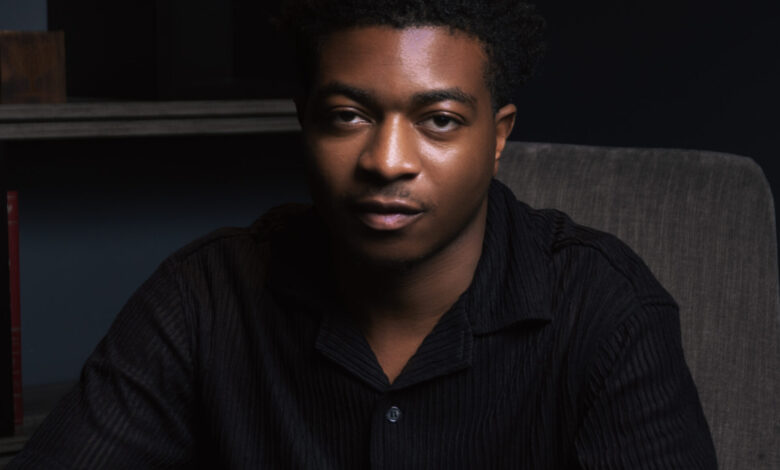
Keith Benza Sheds Light On His Growing Impact In the Industry, His Cinematic Approach to Music Videos Among Other Things. Filmmaker and director Keith Benza is one of the talented rising stars owning the industry at the moment. He is currently shinning with his Best Music Video nomination at the
Metro FM Music Awards 2026 for his work on Mamma by Zee Nxumalo. Benza also did an amazing work as the Director of Photography on the film Mayfair, which is part of the Joburg Film Festival programme.
We recently caught up with Benza with the aim to highlight his growing impact in the
South African visual storytelling space, his cinematic approach to music videos, and how his work continues to elevate the visual language of local music and film.
1. Congratulations on your Best Music Video nomination at the Metro FM Music Awards 2026 for Mamma. What does this recognition mean to you at this stage of your career?
Thank you. This recognition means a lot to me, perhaps even more than the actual award itself. When I announced the nomination on Instagram I wrote that the real win is the nomination, because it shows that our effort is seen and acknowledged. I’ll stand ten toes down and say we made the best video, but at the same time I understand that storytelling can be very personal. Sometimes you get so attached to the narrative that you forget how it feels to watch it as a viewer.
So when a reputable platform acknowledges the work at this level, it becomes confirmation that the intention behind what I do is landing the way I hoped it would. At this stage of my career, that means everything. It tells me I’m moving in the right direction and that the risks we take with story, world-building and detail are worth it.
2. The music video for Mamma is set in a stylized Sophiatown-inspired world. What drew you to that era and aesthetic as the visual language for the story?
The first time I heard the song it felt nostalgic immediately. Part of that comes from the melody, which already carries a sense of history, and part of it comes from the rhythm. A lot of people online even said the song feels like it takes you back in time. For me that naturally led to Sophiatown, which I see as a golden era for both fashion and music in South Africa.
But beyond nostalgia, I also heard growth in Zee’s voice. She sounded more mature on this record, and visually I saw an opportunity to transition her from the younger, bubbly image people were used to, into a more sophisticated leading lady. The Sophiatown setting gave us the perfect world to do that. It also makes a statement about where we are now, because I genuinely believe we are in a golden era of South African dance music today, so the past and the present meet in the same space.
3. The video has already surpassed 15 million views online. Why do you think audiences have connected so strongly with the visuals?
I think people connect to the visuals because they feel familiar but still fresh. We have all learnt about the Sophiatown era growing up, so there is already a sense of relatability there, even for people who never lived through it. At the same time, the story gives the video replay value. It is not just performance shots, there is a narrative, there are characters, there are details you might miss the first time.
Another big factor is the team behind the project. We had the right people in every department, and Zee Nxumalo together with Platoon trusted the vision enough to support a production that needed a proper budget to come to life. When the performance, the story, the styling, the set design and the cinematography all work together, the audience feels that effort even if they can’t explain why.
4. Your work is often described as cinematic and narrative-driven. How do you approach storytelling differently when directing a music video compared to a film?
With music videos you get to be more imaginative. I sometimes describe it as painting versus writing a book. A film feels like writing a full novel where the rules of cinema guide you from beginning to end. You can break those rules, but you usually need a strong reason to do it.
Music videos feel more like paintings. You have three to five minutes to create an image that says a lot without needing to explain everything. That freedom makes the space feel almost ungovernable, which is what I enjoy about it. I focus a lot on representation and symbolism in my music videos, something I originally learnt from studying film, but I push it further in music videos because the format allows it.
At the same time, my film background helps me make those ideas more digestible for viewers, and the imagination I use in music videos helps me push boundaries when I work on film. The two disciplines feed each other.
5. You recently served as Director of Photography for Mayfair. How was that experience different from directing your own projects?
The biggest difference is boundaries. As a Director of Photography you have to respect the fact that the director is leading the vision. I cannot cross into telling actors how to perform or deciding how the edit should look. At first that can feel limiting if you forget that your role is still a very important piece of the puzzle.
I like to compare it to working in a restaurant. One day you might be the manager, the next day you are the chef or the waiter. Not everyone can adjust to that, but if you understand that each role matters, you will still give your best work.
Sometimes it is actually refreshing to focus on one element like cinematography. When I am directing, my attention is split across many departments, but as a DOP all my energy goes into creating the best possible image. That focus can be very satisfying.
6. This marks your second consecutive selection at the Joburg Film Festival as a cinematographer. What does returning to the festival mean to you as a filmmaker?
Honestly, it tells me the first time was not a fluke. But on a serious note, it feels like a stamp of approval that I am moving in the right direction. In this industry you do not get performance reviews the way you would in a corporate job. There is no meeting where someone tells you that you are doing well or not doing well.
Selections at festivals and award nominations become that feedback for us. They let you know that the work is connecting beyond your immediate circle. Coming back to the Joburg Film Festival for the second year in a row as a cinematographer gives me confidence that the growth is real and not just luck.
7. Through your creative banner Parallel Vision, you’ve produced visuals for several prominent South African artists. How do you ensure each project has a distinct visual identity?
A lot of it comes down to research and letting the narrative lead the visual language. I try not to force a style just because it looks cool. The story, the music and the artist should tell you what the world needs to look like.
With Parallel Vision the goal has always been to treat music videos like short films. That means thinking about character, setting, symbolism and mood before thinking about camera moves. Once the narrative is clear, the visual identity usually reveals itself naturally.
8. You previously travelled internationally as a touring visual director during Zakes Bantwini’s global run following the success of Osama. How did that experience influence your perspective on visual storytelling?
That experience really removed the idea of limits for me. When you are in another country and you see people singing along to songs you worked on, it changes how you see your role. I remember being in Spain and hearing people sing along to iMali, and it hits you that half of them have probably seen something you shot.
It makes you realise you are not just creating for South Africa anymore, you are creating for the world. From that point on I started approaching visuals with a bigger mindset. Even when the story is local, the execution should be able to stand next to anything internationally.
9. With South African music gaining global recognition, how important do you think strong visual storytelling has become in elevating artists and their music internationally?
It is very important. If our music is competing on the global stage, the visuals have to compete as well. The sound coming out of South Africa right now is world-class, so the imagery around it should reflect the same level of care and ambition.
I also think artists are starting to realise that visuals are not just promotion anymore, they are part of the identity of the music. When the artist takes that seriously, it pushes directors to take it even more seriously, and that is when you start seeing work that can travel beyond borders.
10. With award nominations, festival selections, and successful music videos under your belt, what’s next for you in terms of projects or creative ambitions?
Right now the focus is on expanding Parallel Vision into a stronger production team so we can take on bigger ideas without losing the quality. I am in pre-production on a few projects, but what excites me the most lately is the creative direction space I have stepped into.
We have already done it successfully with artists like Kususa and Zee Nxumalo, where the work goes beyond just shooting a video and becomes about shaping the whole visual identity. More artists are starting to show interest in that approach, and that is where I see myself growing, telling bigger stories, building stronger worlds, and pushing the visuals as far as they can go.
At the same time, I am also building a cultural media platform called Society with my partner, Shingai Darangwa, which focuses on documenting and unpacking culture from our own perspective. That side of the work feeds into my filmmaking as well, because it keeps me close to the conversations and the stories that need to be told.