Apple Finally Folded: What the iPhone Duo Means for You (and Your Wallet)
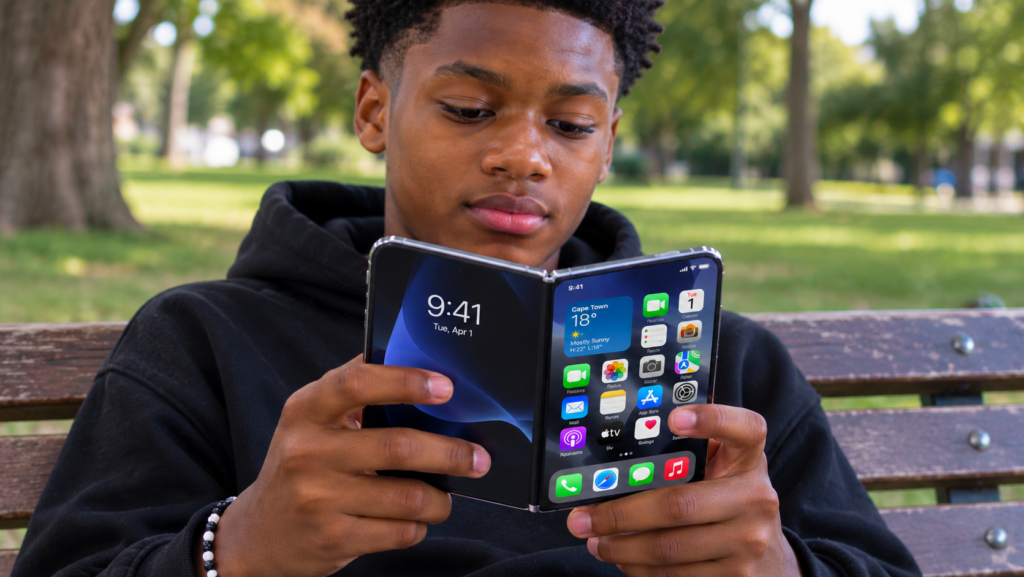
For years, iPhone loyalists have watched their Samsung friends flip their phones open like little books in lectures, on the Gautrain and in the taxi queue, and pretended not to be impressed. Well, nobody has to pretend anymore. Apple has made its own foldable.
The iPhone Duo officially landed in South Africa on 23 October, and the first batch sold out at every iStore in the country on launch day. People lined up and pre-ordered, and some walked into the Sandton store with their old iPhones ready to trade in.
So what’s all the noise about, and should you actually care? Let’s talk about it.
First things first: the price
This isn’t the kind of phone you sneak past your budget. Here’s what the iPhone Duo costs locally:
- 256GB: R47,999
- 512GB: R52,999
- 1TB: R62,499
- 2TB: R76,999
Yes, you read that last one right. R77k for a phone. For context, that’s more than a lot of people pay for a decent second-hand car. Even the entry model costs roughly what an iPhone 18 Pro Max with 2TB of storage does.
In the US it starts at $1,999, so South Africans aren’t being singled out here. Foldables are just expensive, and this one wears an Apple logo on top of that.
Okay, but what actually is it?
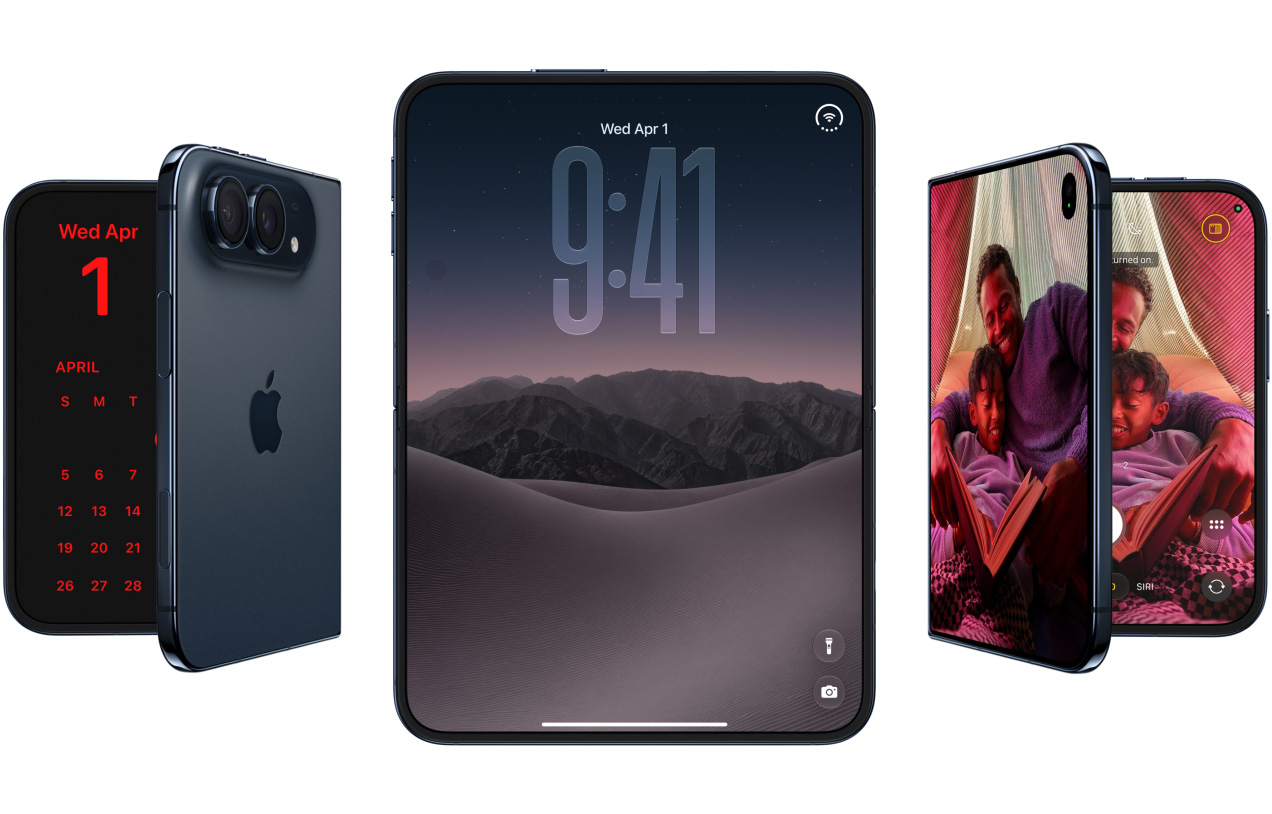
Think of it as two devices sharing one body. Closed, you get a 5.4-inch screen on the outside, which is small enough to use with one hand and fits in your jeans pocket without drama. Open it up and you’ve got a 7.6-inch inner display. Apple says that’s 50% bigger than the iPhone 18 Pro Max screen.
When it’s open, it’s also the thinnest iPhone Apple has ever made. The frame is titanium, there’s Ceramic Shield on the front and back, and it’s rated IP68, so a splash at the braai or a drop into the sink isn’t the end of the world.
Apple’s tagline is “A new iPhone enters the fold.” Corny? A little. But it works.
The stuff that’ll actually matter to you
The screens are gorgeous. Both displays run at up to 120Hz, so scrolling TikTok or Instagram feels smooth. The inner screen gets bright (up to 3000 nits) and has a matte, nano-texture finish that cuts glare. That helps if you’re watching something outside in the Joburg sun.
Battery life is solid. Apple claims up to 44 hours of video on the outer screen and 31 hours on the big inner one. It gets to about 50% in around 20 minutes on a fast wired charger, and it supports MagSafe and Qi2 wireless charging. With load shedding never fully off our minds, that quick top-up counts for something.
The cameras are good, with one catch. You get two 48MP cameras on the back, a main and an ultra-wide, plus a 12MP front camera. It shoots 4K video at 120 frames per second, which content creators will love. The catch is that there’s no telephoto lens, so zoom tops out at 2x optical quality. If you shoot a lot of concerts or soccer from the stands, you’ll notice.
It’s powerful. It runs Apple’s new A20 Pro chip with a vapour chamber to keep it cool, so gaming, editing and multitasking with two apps side by side should be no problem.
A few things are different from a normal iPhone:
- No Face ID. You unlock it with Touch ID built into the side button, like the old days.
- No SIM card slot. It’s eSIM only. Most of the big SA networks support eSIM now, but check with yours before you buy.
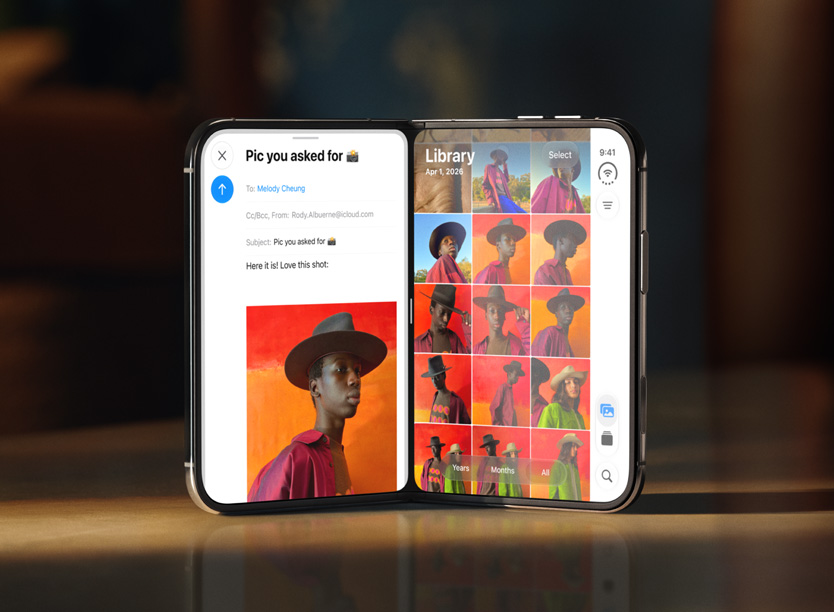
- Apple Pencil works on the inner screen, which is a nice bonus for students who take handwritten notes or sketch.
Now for the honest bit: it’s not perfect
Every foldable has a crease where the screen bends, and the iPhone Duo is no exception. Out of the box, it’s one of the least visible creases on any foldable, especially when you look at the screen straight on. But tests show it gets deeper with use. YouTube channel HTX Studio folded one 3,000 times and found the crease grew from 48 to 167 microns, which made it deeper than two rival foldables in the same test.
Durability tester JerryRigEverything’s bend test left permanent green lines on the inner screen, and eventually it stopped responding to touch. To be fair, rival foldables from Google and Samsung also failed similar tests, so this is a problem for foldables in general, not just Apple. Some reviewers also said the phone ran warm during long video calls.
And it really is a two-handed phone once it’s open.
Still, the reviews have been mostly positive. TechRadar gave it 4.8 out of 5, while PCMag and Tom’s Guide both scored it 4.5.
So, who is this phone actually for?
Let’s be real. For most young South Africans, a R48,000 phone isn’t a this-month purchase. It probably isn’t a this-year purchase either, and that’s completely fine.
The iPhone Duo makes the most sense if you:
- Create content and want a bigger screen to edit on the go
- Read a lot, whether that’s PDFs, e-books or lecture slides
- Run a side hustle from your phone and constantly jump between WhatsApp, email and spreadsheets
- Already have a recent iPhone you can trade in. iStore’s CEO Chris Dodd said customers can bring in something like an iPhone 17 Pro Max and use it as a solid deposit on a Duo.
If you’re none of the above, a regular iPhone 18 will do everything you need for a lot less money.
The verdict
The iPhone Duo is exciting. It’s Apple doing something properly new for the first time in a while, and the sold-out launch shows people were waiting for it.
But it’s a first-generation device, and first-gen tech usually comes with teething problems. The crease, the heat and the durability questions will become clearer once people have used it for a few months, not a few days. If you can wait for version two, you’ll probably get a better phone for a better price.
If you’ve got the money and you’ve wanted a foldable iPhone for years? Go for it. Just get a good case.
Would you spend R48k on a folding phone, or are you sticking with a regular iPhone? Tell us in the comments.