
Interview With Dr Mpopi Lenake As She Brings Global Eye Care Innovation Home Ahead of Major African Congress
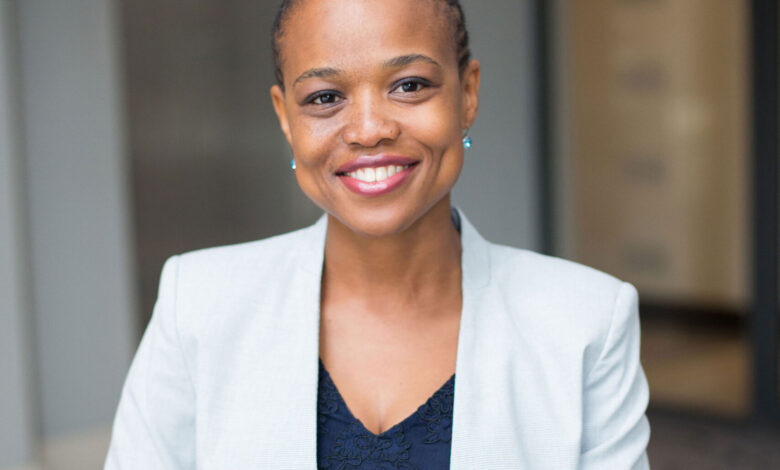
Interview With Dr Mpopi Lenake As She Brings Global Eye Care Innovation Home Ahead of Major African Congress. Dr Mpopi Lenake, a leading South African ophthalmologist whose work is helping advance specialist eye care both locally and across the African continent. She recently returned from the British Oculoplastic Surgery Society (BOPSS) Congress in Sheffield, United Kingdom.
Her participation comes at an important time, as South Africa prepares to host the African Ophthalmology Council (AOC) Congress in Cape Town from 31 July to 2 August 2026. The congress will bring together ophthalmologists, researchers and healthcare leaders from across the continent to discuss innovation, collaboration and improving access to quality eye care for millions of Africans.
Check out her insightful interview with Youth Village below;
1. Having recently attended the British Oculoplastic Surgery Society (BOPSS) Congress, what developments do you believe will have the greatest impact on eye care in Africa?
One of the biggest lessons from BOPSS wasn’t simply about new surgical techniques—it was about how rapidly innovation is reshaping the way we think about patient care. We are seeing remarkable advances in imaging, minimally invasive surgery, reconstructive planning and multidisciplinary care. The real question is not, What is the latest innovation? It is, How do we make that innovation meaningful for the millions of Africans who still struggle to access basic specialist eye care?
Africa cannot afford to be a passive consumer of global innovation. We have to become active partners in adapting, improving and, increasingly, creating solutions that work within our own healthcare systems.
The future of ophthalmology will not be defined by who owns the most advanced technology, but by who succeeds in making high-quality care accessible to the greatest number of people.
2. What are your expectations for the African Ophthalmology Council Congress, and how can it foster innovation and collaboration?
The AOC Congress represents far more than an academic meeting—it is an opportunity to shape the future of eye care across Africa.
My expectation is that the congress will strengthen collaboration between clinicians, researchers, educators and policymakers, while creating practical partnerships that continue long after the meeting concludes. Africa has no shortage of clinical expertise or innovation; what we need is stronger coordination, greater investment in training, and shared strategies for addressing our common challenges.
Hosting the congress in South Africa also provides an opportunity to showcase African excellence while encouraging greater collaboration between countries. The most valuable outcome will be a collective commitment to improving access to specialist eye care for every patient, regardless of geography.
3. How is international collaboration shaping the future of eye care in Africa?
International collaboration is often viewed as knowledge flowing into Africa. I believe the future is far more balanced than that.
Yes, African ophthalmologists benefit from exposure to world-leading centres through fellowships, collaborative research and international congresses. But equally, the global ophthalmology community has much to learn from African clinicians who routinely manage advanced disease, innovate within resource-limited environments and develop highly adaptable models of care.
The most successful collaborations are those built on mutual respect rather than dependency. They strengthen local capacity, develop future leaders and leave behind sustainable systems rather than short-term interventions.
Ultimately, collaboration should create independence—not reliance.
4. Which innovations in ophthalmology are you most excited about?
Artificial intelligence, advanced imaging and increasingly sophisticated reconstructive techniques are undoubtedly transforming ophthalmology. Yet I believe the most important innovation over the next decade will not necessarily be technological.
It will be our ability to integrate technology into healthcare systems in ways that improve equity.
An AI algorithm has little value if patients cannot reach a clinic. A sophisticated surgical technique changes very little if there are too few surgeons to perform it.
Innovation succeeds when it shortens waiting times, expands access, improves outcomes and strengthens healthcare systems. Those are the innovations Africa needs most.
5. What are the greatest barriers to preventing blindness in Africa?
We often speak about blindness as though it is primarily a medical problem. In reality, it is also a systems problem.
Patients present late because healthcare systems are fragmented. Referral pathways are inconsistent. Specialist services are unevenly distributed. Public awareness remains limited. Financial and geographic barriers prevent many people from accessing care before permanent vision loss occurs.
The encouraging reality is that many of these barriers are solvable.
By strengthening primary eye care, improving referral networks, investing in specialist training and integrating eye health into broader public health planning, we can significantly reduce avoidable blindness across the continent.
The greatest tragedy is not that some eye diseases cannot be treated—it is that too many treatable conditions are diagnosed too late.
6. What role does South Africa play in training African ophthalmologists?
South Africa has long been recognized as one of the continent’s strongest centres for ophthalmic education, and that responsibility continues to grow.
Training tomorrow’s ophthalmologists is no longer simply about producing competent surgeons. We must also develop educators, researchers, innovators and health system leaders who can strengthen eye care across Africa.
We should also think beyond individual institutions. Building stronger regional training networks, expanding fellowship opportunities and increasing collaboration between African countries will have a far greater long-term impact than any single programme operating in isolation.
Our goal should not simply be to train specialists—it should be to build sustainable specialist ecosystems.
7. How do innovation, research and specialist skills improve patient outcomes?
Patients benefit when these three pillars work together.
Research tells us what works. Innovation gives us better tools. Specialist training ensures those tools are used safely and effectively.
One area where Africa must become more ambitious is locally driven research. Our disease burden, healthcare systems and patient populations differ from many parts of the world. We need evidence generated in Africa to inform African healthcare policy.
Equally important is investing in sub-specialist training. As populations grow and healthcare becomes more complex, expertise in fields such as oculoplastics, glaucoma, retina and paediatric ophthalmology will become increasingly important.
The most valuable investment any country can make is in highly skilled people.
8. What should the public know about protecting their vision?
The most important message is that vision loss is often preventable—but only if problems are detected early.
Many serious eye diseases develop silently. Patients should not wait until their vision has deteriorated before seeking an eye examination, particularly if they have diabetes, hypertension or a family history of eye disease.
I also encourage people to think of eye health as part of their overall wellbeing. Looking after your eyes is no different from protecting your heart or kidneys. Prevention, regular screening and timely referral remain our most powerful tools.
Sight is something many people only truly appreciate once it begins to disappear.
9. How do you see South Africa’s contribution evolving over the next decade?
I believe South Africa has the opportunity to become a continental leader not only in clinical excellence, but also in education, research and health policy.
We already produce outstanding clinicians. The next step is to build stronger African research collaborations, expand specialist training opportunities and help shape policies that improve equitable access to eye care.
Leadership is ultimately measured by how many others you empower.
If South Africa can help develop the next generation of African ophthalmologists while strengthening healthcare systems across the continent, our impact will extend far beyond our own borders.
10. What message would you like to leave with healthcare leaders and policymakers?
Eye health should no longer be viewed as a niche specialty.
Vision affects education, employment, productivity, independence and quality of life. Every investment in preventing blindness delivers returns across society.
As healthcare leaders, we often speak about universal health coverage. Universal health coverage cannot be achieved while millions of people remain unable to access basic eye care or life-changing surgery.
Africa has extraordinary talent. We have dedicated clinicians, world-class educators and increasingly strong research networks. What we need now is sustained investment, thoughtful policy and a shared commitment to ensuring that quality eye care is not determined by geography or socioeconomic status.
Preventing blindness is not simply about restoring sight. It is about restoring opportunity, dignity and human potential