Interview With Dentsu School of Influence Johannesburg Winner Kgomotso Masebuko
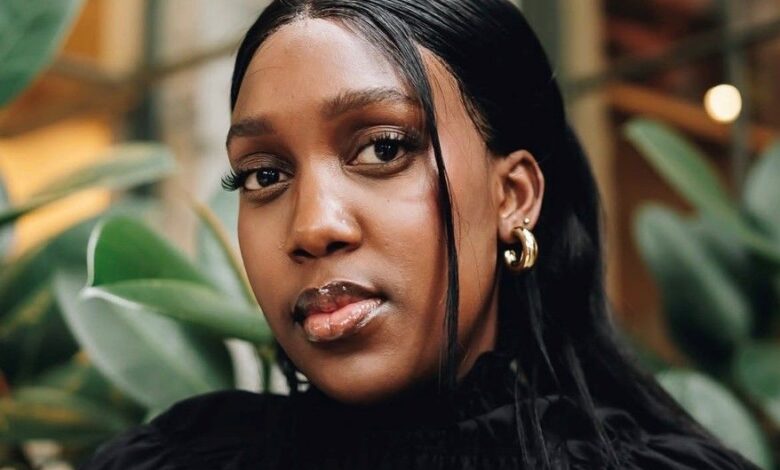
Interview With Dentsu School of Influence Johannesburg Winner Kgomotso Masebuko. In partnership with CSA, Dentsu South Africa invited creators to apply for the Dentsu School of Influence. This is a Youth Month) programme designed to help young talent turn creativity into sustainable careers. One of the winners is Kgomotso Masebuko, a Johannesburg based content creator. We recently sat down with her as she took us through her work as a creative, winning the Dentsu School of Influence internship and her plans for the future.
01 You describe yourself as a creative rather than simply a writer. How would you define your creative identity, and how has it evolved throughout your career?
Growing up, I always struggled with being niched. I could never choose one identity. One year I wanted to be the next Tyla, the next year I wanted to lecture in English, and the following year I wanted to be a writer. Every year, my identity is redefined, so I figured, why don’t I just call myself a creative? The common factor in all of these things is the need and desire to create something. I think that’s the one thing that has always stayed consistent.
02 Storytelling appears to be at the centre of your work across journalism, fashion, content creation and strategy. What makes a story meaningful and capable of genuinely connecting with an audience?
Emotive pull. I’ve realised that as consumers of the internet, our memories aren’t always that great. You could see a really great piece of content now and forget about it later, but what you won’t forget is how it made you feel. I think what makes a story meaningful is its ability to hold up a mirror to the audience. People either need to see themselves in the content or have someone come to mind when they see it. For me, that’s when you know a story has connected.
03 After graduating Cum Laude with a Diploma in Journalism, you gained experience working with platforms such as YOU Magazine, News24, True Love Magazine and IOL. What did those experiences teach you about journalism and storytelling?
My experience taught me that there are many sides to a story and many ways to tell one story. Even in the most mundane things, there is a story. Journalism taught me to look a little closer and to not overlook the ordinary. Secondly, what you consume alters the way you experience life, and that ultimately impacts the way you tell stories. The stories I consume shape the way I see the world, and the way I see the world shapes the stories I tell.
04 Your career has expanded into styling, social media management, content creation and fashion content creation. What inspired you to explore different creative disciplines rather than specialising in just one?
To be honest, being a multimedia journalist made me realize that being vast helps you grow as a person. The ability to change lanes while still being good at the other things you do makes you undeniable. I don’t want to be limited to one thing when I know I can do multiple things well. That has really become my why: I want to be undeniable.
05 You have collaborated with brands such as Faro, Yellow Sub Trading and Converse. What do you look for when deciding whether a brand partnership aligns with your creative identity?
Firstly, what the brand stands for. It can be difficult to always be in the know about everything a brand stands for, especially on a political or social scale, but it’s important to remember that when you partner with a brand, you become a representation of it too.
Secondly, the campaign needs to speak to my authentic self. If I get a brief and my first reaction is to shrug, or I can’t genuinely see myself talking about the product, then maybe it’s just not for me. I think the best partnerships happen when the brand and the creator don’t feel forced together.
06 You founded Nari, a Christian lifestyle brand and community that combines creativity, faith and storytelling. What inspired you to create Nari, and what impact do you hope it will have on its community?
The slogan for Nari Studio is “Where light gathers.” I’m actually quite an antisocial person with a social battery of about two hours, and working in media has often meant being in spaces that left me feeling drained. At the same time, I love community and meaningful conversation.
So when I started Nari, I had that in mind. I thought, how can I bring my faith, fashion and creativity into one thing and create a space where people can commune with other creatives and, of course, The Creator? I wanted Nari to feel like a place where you can come as you are, connect with people and leave feeling a little more illuminated than when you arrived.
07 As someone who works across fashion, faith, journalism and digital content, how do you balance creativity with strategy when developing content?
I immerse myself in every brief individually. I approach each of those pillars independently because the strategy Nari needs might not work for my personal brand, and what works for my personal brand might not work for a client.
I think creativity and strategy have to work together, but strategy should never take away the creative instinct. I always want to understand who I’m speaking to, what I’m trying to achieve and why it matters before I decide what the content should look like.
08 You were selected as a winner of the Dentsu School of Influence internship. What do you believe you brought into the programme that helped you stand out?
Apart from winning the Dentsu School of Influence internship and the FoneYam partnership, I also won the Content Creator Excellence Award. I think what made me stand out was how seriously I treated every brief. I approached every opportunity with diligence and excellence, regardless of how big or small it was.
I think I’ve always had this mindset that if I’m going to do something, I want to do it properly. That probably came through in the way I approached the programme.
09 You mentioned that the Dentsu School of Influence taught you that great content is not simply about following trends, but about understanding people, thinking strategically and telling stories with intention. How has this changed the way you approach your work?
This has changed the way I work immensely. I’ve started to have more respect for my followers because their views and engagement are currency. They are choosing to give me their attention, and I don’t take that lightly.
That means I have a responsibility to create quality content. Every post needs to have an objective and answer the question, “Why should they care?” I don’t want to create just for the sake of posting. I want people to feel like there was a reason they stopped scrolling.
10 Looking ahead, how do you envision bringing together your identities as a writer, strategist, stylist, creator and storyteller to build a lasting career and creative legacy?
At this stage in my career, I’m working towards becoming a storytelling lead. I don’t know if that’s necessarily the correct title yet, but essentially, I want to be the person brands come to when they want to tell their stories better.
I want to bring together my experience as a writer, strategist, stylist and creator and use all of those perspectives to help brands immerse themselves in other people’s stories and communicate with more intention. I think my career has always been about storytelling in different forms, so the next step for me is bringing all of those skills together and becoming really good at helping other people tell their stories.